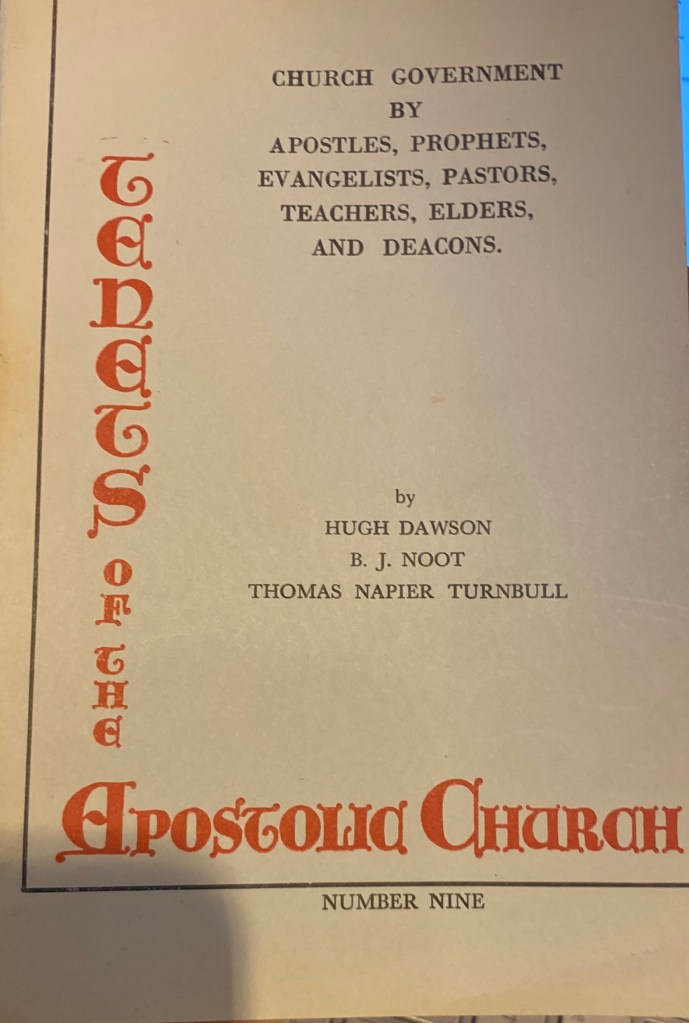
When I was a new Christian, an older evangelist, who I worked alongside in a mission that reached out to the marginalised, discovered a book that helped him understand his calling. He recognised the same calling in me, and gave me a copy of the book. The book deeply impacted me, and its influence remains to this day. The book was ‘And some evangelists…’ by Roger Carswell. The thesis of the book was simply the fact that churches have neglected the calling of evangelists and have prioritised Pastors and teachers. The book not only unpacks the biblical teaching on what an evangelist is, it shows why the ministry of the evangelist is so important.
In his foreword to the book Warren W. Weirsbe writes:
Each local church is one generation short of extinction and the only way to keep the family growing is through evangelism.
That’s a sobering statement!
Weirsbe continues:
If we expect to see expanding evangelism in the nation and the world, there must be evangelists in local churches keeping the fires burning.
One of the reasons I love the church where I’m a Minister, is the fact that it has always recognised all of the giftings mentioned in Ephesians 4 (we will look at these later).
This post also has some personal relevance for me in this season because on Saturday the 6th of June, I’ll be gathering with other Ascension Ministers and leaders in the Apostolic Church for a time of ministry and also to be set apart as an evangelist in the Body of Christ. Two other pastors are also being set apart into other callings, another to the office of evangelist and one to the office of teacher.
In this post, I’d like to spend a bit of time reflecting on the gift of evangelist, both from a Biblical perspective, but also from the theological and historical perspective of the Apostolic Church where I’m a Minister.
The Evangelist is only directly mentioned three times in the New Testament (though the evangelistic spirit permeates both Old and New Testaments – God is the ultimate evangelist).
In Ephesians we read:
9 (What does “he ascended” mean except that he also descended to the lower, earthly regions[c]? 10 He who descended is the very one who ascended higher than all the heavens, in order to fill the whole universe.) 11 So Christ himself gave the apostles, the prophets, the evangelists, the pastors and teachers, 12 to equip his people for works of service, so that the body of Christ may be built up 13 until we all reach unity in the faith and in the knowledge of the Son of God and become mature, attaining to the whole measure of the fullness of Christ. Eph 4:9-13 (NIV)
In Acts we read:
Leaving the next day, we reached Caesarea and stayed at the house of Philip the evangelist, one of the Seven. Acts 21:8 (NIV)
In 2 Tim we read:
But you, keep your head in all situations, endure hardship, do the work of an evangelist, discharge all the duties of your ministry. 2 Tim 4:5 (NIV)
In 1940, a pastor in the Apostolic Church used the illustration of the five fingers of a hand to demonstrate the distinctions of the five giftings (it’s not a perfect illustration, but it is helpful).
THE PROVISION OF THE GIFTS
“He gave some, apostles; and some, prophets; and some, evangelists; and some, pastors and teachers. The five gifts have been aptly illustrated from the hand:
- Apostles. The thumb. Speaks of Power, control, government.
- Prophets. First finger; the “pointer” speaks of Purpose and direction.
- Evangelists. The longest finger, reaching out, speaking of Proclamation of the Gospel.
- Pastors. This finger has special tenderness, and speaks of Protection.
- Teachers. Small, but of special significance, speaking of Provision.
This is the Divine Order, and no Church is complete without the ministry of each of these gifts.
Studies in Ephesians Pastor F.C Poole 1940
In addition to the distinctions of the gifts, the statement: “no Church is complete without the ministry of each of these gifts.” is insightful. For the maturation of the church, all five ministries are needed.
Notice Poole sees the evangelist to be the ministry that is “reaching out”. This reflects other Apostolic teachings on the evangelist.
‘The Evangelist … has liberty to break up new ground, to open new doors, pioneering in front of the apostles and prophets, who follow him to establish churches and set them in order.’
(D.P. Williams, The Work of the Evangelist, p.14)
T.N. Turnbull makes a similar point:
The Evangelist has many kinds of work in his sphere of labour. First of all he is God’s pioneer in the world, especially endowed by Him for his task. He is called to break new ground in front of the Apostleship as Philip did in Samaria. After Philip had preached the Gospel, the Apostles Peter and John came down from Jerusalem and laid hands on the converts that they might receive the Holy Spirit. The Evangelist is to do this work in divers places and countries, at home and abroad, and as he speaks in the power of God blessing will result.
Ps Thomas Napier Turnbull
In addition to pioneering, the Apostolic Church ministry manual also says evangelists have a role in equipping the saints for works of ministry.
The evangelist exercises his ministry in two principal direc-tions, to the believer and to the unbeliever. God has given the evangelist to the Church and as such his ministry stimulates the Church to evangelism by communicating vision and goals, preparing the believers for involvement and action and leading the fellowship by example in evangelistic outreach. The ministry of the evangelist offsets the tendency of the Church to be inward looking and directs its spiritual and physical resources to outside involvement in an all-round, evangelistic ministry.
The Apostolic Church: A Manual of Belief, Practice and History
Another important aspect of evangelistic ministry is the need to not let the evangelist get bogged down in the details of church organisation.
Both Williams, Turnbull and the Apostolic Church ministry manual make this point.
‘The Evangelist is therefore relieved by God in wisdom from being encumbered with the cares, and burdened with the responsibilities which are attached to other callings, seeing that the care and travail of soul for the lost are enough to weigh him down.’
D.P Williams
There ought to be full-time Evangelists who should be wholly devoted to this task of pioneering on behalf of God. His life should be set apart entirely for this work and be wholly dedicated to proclaim Jesus Christ and Him crucified. All the burden of Church organisation should be left to others.
If such an Evangelist is absorbed in the burden of organisation he cannot give attention wholly to spread the glorious message of the Gospel of salvation, so he should be set free from all such encumbrances. By doing so he will be helped to become a specialist in his sphere of labour and gain great facility in its service. He will mature in his office and become a greater preacher of the Gospel.”
Ps Thomas Napier Turnbull
The evangelist has little to do with church government in the sense of administration, but when government is understood as direction, he leads the fellowship into a continuous involvement in evangelism which leads men to Christ.
The Apostolic Church: A Manual of Belief, Practice and History
The above extracts are relevant when the context of an evangelist’s ministry is church planting. Church planting is an aspect of the evangelist’s calling, but once the foundations are laid, and the work is established, the evangelist needs released otherwise the administration will hinder the outward focus of the evangelist. New ground will be lost. The evangelist at heart is a ministry of sowing and harvesting, others have the responsibility for storing and stewardship of the grain.
Turnbull again highlights the blessings that God has designed for the church when evangelists are released into the fulness of their calling.
Today we require God-given Evangelists who will preach the truth of the Gospel, under the mighty power of the Holy Spirit, so that many may be saved, and that the empty Churches may be filled.
Ps Thomas Napier Turnbull
Given the importance of the ministry of the evangelist, it’s incredible to think how much the ministry of the evangelist has been neglected.
Carswell writes in his book: “In his autobiography, Be Myself, Warren Wiersbe calls itinerant evangelists an ‘endangered species’!”
Carswell continues:
In the western world, evangelists appear to be a diminishing, and often disgraced, group of people. We have Christian dramatists, clowns, mime artists and magicians. We have godly pastors and Bible teachers, as well as singers whose ministry feeds the flock of God; but where have all the evangelists gone? Where are the people who are called by God to give their life to reaching the lost with the gospel… God has given evangelists to the church, and if we overlook his provision, can we realistically expect to make advances into enemy territory?
The Apostolic Church, despite having a rich legacy in recognising evangelists, has also had struggles in this area. Yet there is encouraging signs of late in that several people are being set apart as evangelists. This is surely a move in the right direction? Praise God for the setting apart of evangelists and may many more be raised up in the days that lie ahead.
Finally, D.P Williams reminds us that the ascension gifts of Christ are not for the benefit of the individuals who are gifted, they are for the wellbeing of the church:
“The Holy Ghost has ordained the Gifts of the Church, for the edification of the saints. They are not intended for the use of the individual, but for the Church. If we like to follow our own imaginings, and run to and fro vainly, we will not be in the purpose of this great visitation that is among us. We must be united in order to face the opposition which we have been warned is coming. The Holy Ghost dwells in His Church and not in the Blessing”.
D.P. Williams
 Rev John James